Category: Buying Guides

  • Custom Ziplock Bags: Materials, Sizing & Branding Guide

    Custom Ziplock Bags: Materials, Sizing & Branding Guide

    Custom Ziplock Bags: A Materials, Sizing, and Branding Guide

    Getting custom ziplock bags right comes down to three decisions: the material, the size or spec, and how you brand them. Make those well and you end up with custom ziplock bags that protect and present your product, reinforce your brand, and land on budget. This guide walks through the material options, how to size and spec your order, and how to decorate custom ziplock bags so they do real work for your brand rather than just checking a box.

    Whether you are ordering your first run or reordering at scale, the same fundamentals apply. Choosing custom ziplock bags deliberately — material to job, size to product, decoration to brand — is what separates an order you are proud of from one you settle for.

    Why custom ziplock bags matter for your brand

    Custom ziplock bags are more than a commodity; they are a touchpoint brands experience directly. A well-chosen, well-branded option signals quality and attention to detail, while a generic one quietly undercuts an otherwise strong product. Because custom ziplock bags are seen and handled, they carry your brand into the world every time they are used.

    That visibility is exactly why it pays to spec custom ziplock bags intentionally. The material sets the feel, the size sets the fit and cost, and the decoration sets the impression — and getting all three aligned turns a functional item into a genuine brand asset.

    Materials and options compared

    The common materials for custom ziplock bags each trade off durability, print quality, and cost: kraft paper, laminated / matte film, cotton / canvas, and non-woven polypropylene. The right pick depends on how the ziplock bags will be used, the look you want, and your budget. The chart and table below compare the main options so you can match material to job.
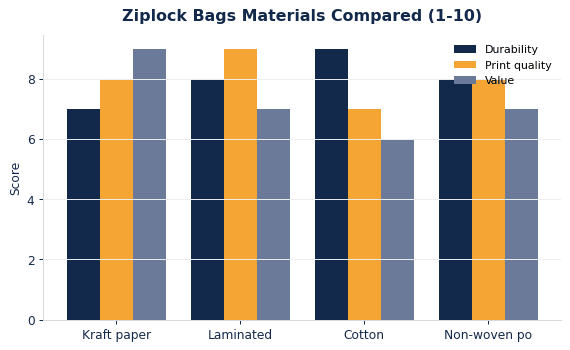
    How common ziplock bags materials compare on durability, print quality, and value.
    How common ziplock bags materials compare on durability, print quality, and value.

    As a rule of thumb, choose a recyclable or natural material when eco positioning matters, a coated or laminated option when you want vivid full-color print, and a premium build when the ziplock bags is part of a gift or high-end presentation. When in doubt, request a sample so you can judge feel and print before committing to a full run.

    Material / option Best for
    Kraft paper recyclable and natural, ideal for eco positioning
    Laminated / matte film durable, moisture-resistant, premium finish
    Cotton / canvas reusable and sturdy for a keepsake feel
    Non-woven polypropylene low-cost, reusable, lightweight

    Sizing and specs

    Sizing is where many ziplock bags orders go wrong, so measure before you order. Custom ziplock bags typically range from a slim gift bag up to a wide gusseted grocery or retail bag, and the right size and gusset depends on the product or use they serve. Too small and the fit is tight or the product is exposed; too large and you pay for material you do not need and lose a clean, intentional look.

    When a measurement falls between standard options, size to the product with a small margin rather than guessing. Confirming the size and gusset on a proof or sample before a large run prevents the costly mistake of a full order that does not fit, which is far more expensive to fix than a five-minute check up front.

    Branding and decoration

    Decoration is what turns a plain ziplock bags into a branded one. Screen printing suits bold one- or two-color logos, while full-color printing wraps detailed art edge to edge. Match the method to your artwork and budget: simple logos reproduce cleanly and cheaply, while detailed, full-color designs shine with the right process on the right material. Keep the artwork vector where possible and confirm the print area for your chosen size.

    Restraint usually reads as premium. A clean logo, one or two brand colors, and quality material almost always look more considered than a busy, over-printed design. Approving a proof before the run protects both the look and the budget, especially on a large order of custom ziplock bags.

    Ordering and budget

    Per-unit cost on custom ziplock bags falls steadily with volume as setup amortizes across more pieces, so ordering for real demand rather than a token first batch is usually the efficient move. The curve below shows how pricing typically improves with quantity, which helps you plan an order that balances cash and cost.
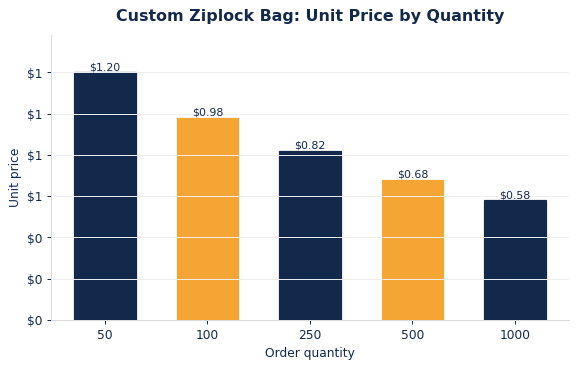
    Typical per-unit ziplock bags pricing as order quantity increases.
    Typical per-unit ziplock bags pricing as order quantity increases.
    Ordering for a recurring need? A single larger run lowers the unit cost and keeps your branding consistent, while a small overage covers reorders and the occasional damaged piece without a rush order.

    Common mistakes to avoid

    A few avoidable missteps account for most disappointing ziplock bags orders. Ordering before measuring is the biggest, followed by choosing a material for price alone without considering how the ziplock bags will actually be used, and skipping the proof on a large run. Each is easy to prevent with a few minutes of planning, and each is expensive to fix once a full order is produced.

    The other common trap is over-designing the artwork. Cramming in too many colors, effects, or details can muddy the print and raise the cost, especially on textured or recycled materials. Simplifying the design to a clean, legible mark almost always improves both the look and the price of your custom ziplock bags.

    Frequently asked questions about custom ziplock bags

    What material is best for custom ziplock bags?

    It depends on the use: choose a recyclable or natural material for eco positioning, a coated or laminated option for vivid full-color print, and a premium build for gifting or high-end presentation. Request a sample to judge feel and print before a full run of custom ziplock bags.

    How do I choose the right size?

    Measure the product or use the ziplock bags serves, then size to it with a small margin so the fit is clean without wasting material. When a measurement falls between standard options, size up slightly and confirm the size and gusset on a proof before ordering in volume.

    How are custom ziplock bags branded?

    Screen printing suits bold one- or two-color logos, while full-color printing wraps detailed art edge to edge. Match the method to your artwork and budget, keep the art vector where possible, confirm the print area for your size, and approve a proof so the finished custom ziplock bags match your intent.

    How does pricing work, and is there a minimum?

    Per-unit cost drops with quantity as setup amortizes across the run, so larger orders are more cost-effective. Order for real demand plus a small overage rather than a token batch, and consolidate recurring needs into one run for the best price.

    Can I get a sample or proof before ordering?

    Yes, and it is strongly recommended. A physical sample lets you judge material and print, and a digital or physical proof confirms your artwork, color, and size and gusset before a full run — a small step that prevents a costly mistake on a large order.

    What do you need to quote custom ziplock bags?

    To quote accurately we need the size and gusset or the product they serve, the quantity, your material preference, and your artwork or a description of the branding. With those details we can recommend the right material and size and give you pricing for the run, and a proof follows once the order is confirmed.

    Whatever you order, send vector artwork, confirm material and size and gusset, and approve a proof before production. For help matching custom ziplock bags to a specific use, see our companion guide, our How to Choose Custom Ziplock Bags for Your Brand, and explore our our shop to start your order.

    Ready to order custom ziplock bags?

    Tell us your product, quantity, and branding and we’ll match the material, size, and decoration for you.
    Get a Quote

  • Customized Ziplock Bags: A Buyer’s Guide for Food, Retail & Parts

    Customized Ziplock Bags: A Buyer’s Guide for Food, Retail & Parts

    Call or Text us: (929) 605-4397

    Customized Ziplock Bags: A Buyer’s Guide for Food, Retail & Parts

    Customized ziplock bags are the quiet workhorse of product packaging: a resealable pouch with your branding that protects everything from granola to gaskets while doing double duty as shelf presence. Food brands, apparel companies, hardware distributors, and subscription boxes all buy them, but they rarely need the same bag. Film type, thickness, closure style, and print method each change the cost and the job the bag can do, and quoting “a printed ziplock” without pinning those down is how buyers end up with bags that split, fog, or fail a retail audit. This guide covers the specs that matter so your customized ziplock bags fit the product, the shelf, and the budget.

    Start With What Goes Inside

    The contents dictate the film. Dry snacks and coffee need barrier layers that block oxygen and moisture; apparel needs clarity and a clean feel; screws and fittings need puncture resistance; anything scented needs odor control. Write down the product weight, whether it is sharp or greasy, and how long it must stay fresh, because those three facts drive every downstream choice.

    Then think about the retail context. A bag that hangs on a peg needs a hang hole and a stiff header. A bag that stands on a shelf needs a bottom gusset. A bag that ships inside another box can be simpler and thinner, which saves real money at volume.

    Film & Thickness: The Spec That Decides Durability

    Standard LDPE ziplocks run from 1.5 to 6 mil. Two mil suits lightweight retail items and literature; 3 mil is the safe default for apparel and small parts; 4 mil handles food and denser goods; 6 mil is for hardware, bolts, and anything with edges. Laminated structures such as PET/PE or foil add barrier and stiffness for food and supplements, and they print beautifully, at a higher price per unit.

    Thickness is the cheapest insurance you can buy. Moving from 2 to 4 mil typically adds only a few cents while eliminating most field failures, so err heavier whenever contents are sharp or heavy.

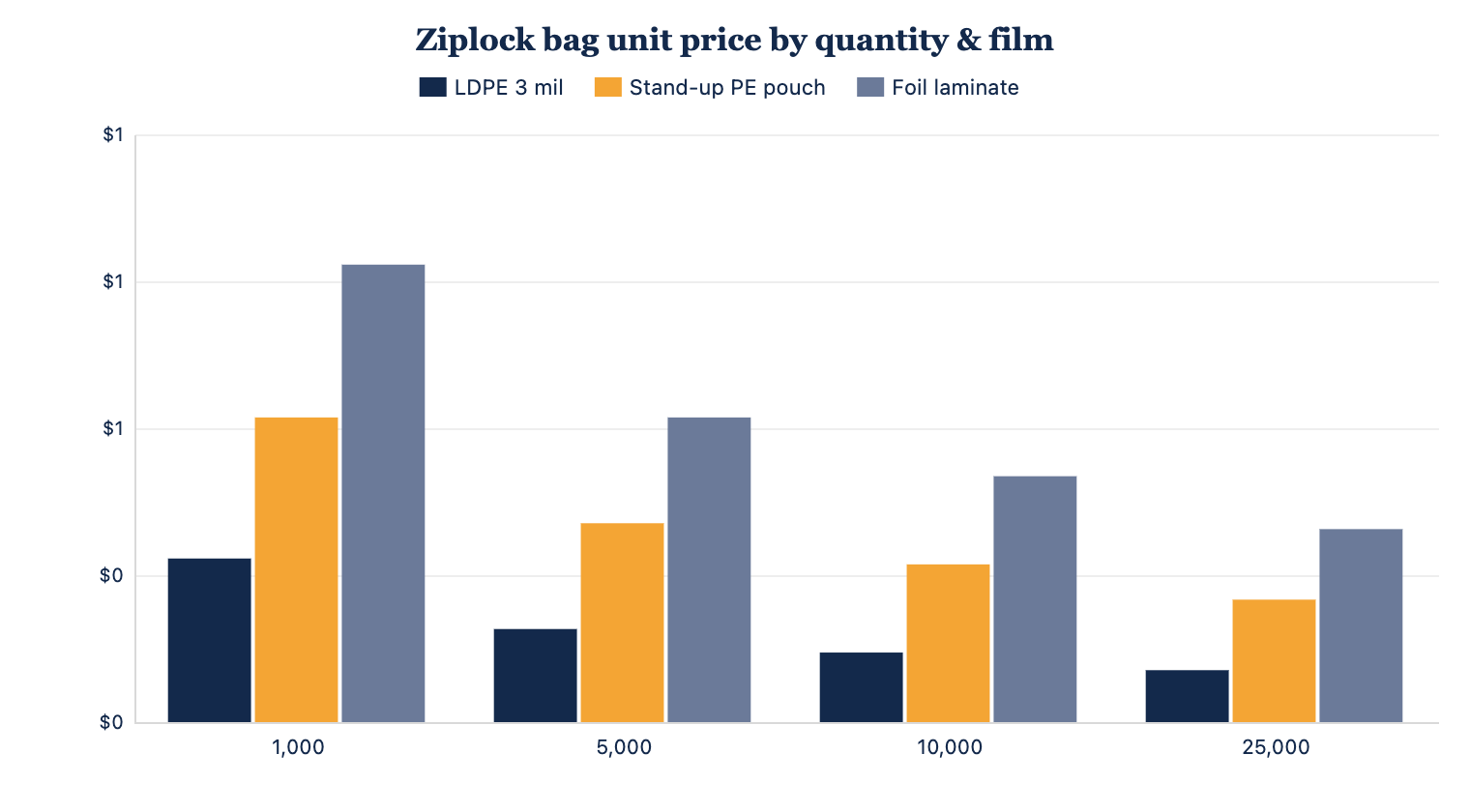
    Unit price of customized ziplock bags by order quantity and film type.
    Typical unit pricing by quantity for plain LDPE, stand-up, and laminated barrier constructions.

    Closures, Gussets & Formats

    The classic press-to-close zipper is fine for most uses, while sliders add perceived quality and easier one-handed opening for older customers. Child-resistant zippers are mandatory in some regulated categories, and tamper-evident tear notches above the zipper are standard for food. Stand-up pouches with bottom gussets have become the default retail format because they merchandise themselves, and flat bags with hang holes remain the budget pick for pegboard retail and e-commerce inserts.

    Print methods at a glance

    Flexographic printing suits one- to three-color logos at high volume with low unit cost. Rotogravure and digital printing deliver photographic, full-coverage designs; digital carries no plate fees, which makes it ideal for short runs and multi-SKU lines that share a bag size.

    Comparing Common Constructions

    Construction Barrier Typical cost Best for
    LDPE 2–4 mil Basic $ Apparel, parts, inserts
    Stand-up PE pouch Good $$ Retail shelf, snacks
    PET/PE or foil laminate Best $$$ Coffee, supplements, jerky

    Notice that the jump between tiers is measured in cents, not dollars. For food brands especially, the laminate premium is usually cheaper than the shelf-life complaints it prevents.

    Where Buyers Actually Use Them

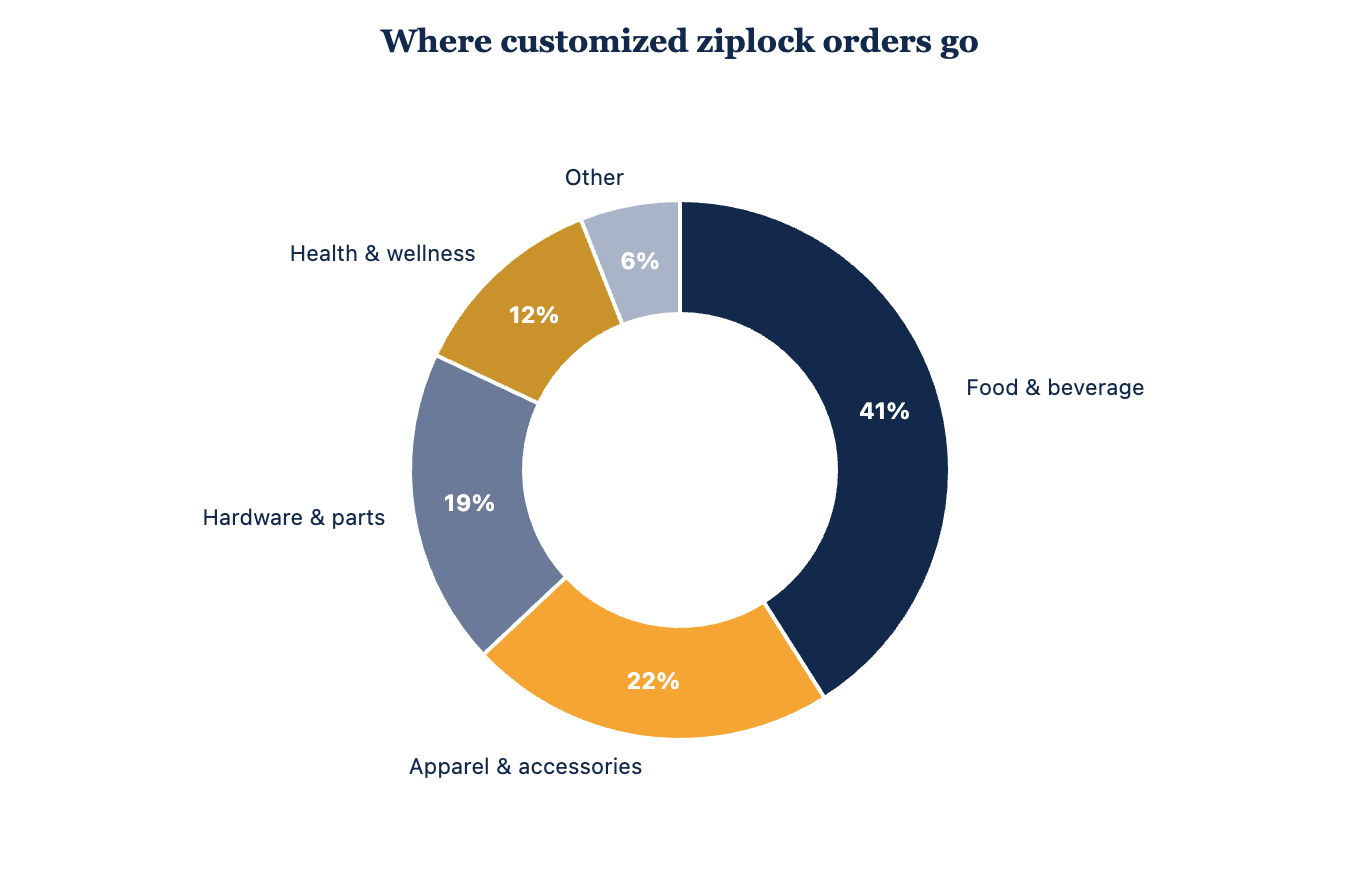
    Across our order book, food and beverage leads the category, followed by apparel and accessories packing, hardware and parts kitting, and medical or wellness uses. The split below is a useful benchmark: if your use case sits in the food segment, plan for barrier film and compliance printing; if you are in parts and kitting, spend on thickness and a wide zipper instead.

    How businesses use customized ziplock bags across food, apparel, parts, and wellness.
    Use-case split for customized ziplock orders: food leads, parts and apparel follow.

    Sizing: Measure the Fill, Not the Flat Bag

    Bag dimensions are quoted flat, but contents are three-dimensional, so a bag that measures generously on paper can be tight in practice. The working rule is to add roughly an inch of width and two inches of height beyond the filled footprint of the product, more if the contents are lumpy or need headspace above the zipper for a clean seal. For stand-up pouches, the gusset depth sets how much the bag can actually hold upright, and undersizing it is the most common reason a pouch tips on the shelf.

    If you run multiple SKUs, resist the urge to give every product its own size. Consolidating onto two or three shared bag sizes raises the volume on each, which drops the unit price and simplifies reordering, and a well-placed label zone makes one bag serve many products.

    Compliance & Labeling

    Food-contact bags need FDA-compliant film and, for many categories, printed nutrition and allergen panels; supplements add lot and expiry areas. If you sell into California, factor Prop 65 wording, and if your brand leans green, ask about recyclable mono-material PE structures, which are increasingly retail-mandated. Getting these panels into the printed design from day one is far cheaper than stickering thousands of bags later. Read more about our team and how we pre-flight compliance artwork.

    Quantities, Pricing & Lead Times

    Plate-based printing rewards volume: unit prices drop sharply between 1,000 and 25,000 pieces, and plate fees amortize to nothing. Digital short runs start around 500 units with no plates, perfect for testing designs before committing. Stock-size bags with a simple logo can turn around in two to three weeks; fully custom laminated pouches typically run six to ten weeks including sampling, so retail launch dates need early booking. You can compare formats and see live pricing examples on our homepage.

    Tip: Always fill-test a sample with your real product, seal it, and ship it to yourself. A five-dollar test parcel reveals zipper creep, pinholes, and scuffing before they become a five-thousand-bag problem.

    Ordering by Business Type

    A snack or coffee brand should prioritize barrier laminate, tear notch, and a stand-up format, then let digital printing keep multi-flavor runs affordable. An apparel brand needs clarity, a 3 mil hand feel, and a suffocation-warning print for marketplaces. A hardware distributor should buy 4–6 mil with a wide zipper and write-on block. Whatever the category, lock the film first, the format second, and let quantity drive the price, and your customized ziplock bags will disappear into the workflow instead of becoming a support ticket.

    Ready to spec your resealable packaging?

    Send us your product, sizes, and quantities, and we will recommend a film, closure, and print method with firm pricing within one business day.

    Get a Quote

    Home · About · Custom resealable packaging guides for food, retail, and industrial buyers.

    GET A QUOTE