Customized Ziplock Bags: A Buyer’s Guide for Food, Retail & Parts
Customized ziplock bags are the quiet workhorse of product packaging: a resealable pouch with your branding that protects everything from granola to gaskets while doing double duty as shelf presence. Food brands, apparel companies, hardware distributors, and subscription boxes all buy them, but they rarely need the same bag. Film type, thickness, closure style, and print method each change the cost and the job the bag can do, and quoting “a printed ziplock” without pinning those down is how buyers end up with bags that split, fog, or fail a retail audit. This guide covers the specs that matter so your customized ziplock bags fit the product, the shelf, and the budget.
Start With What Goes Inside
The contents dictate the film. Dry snacks and coffee need barrier layers that block oxygen and moisture; apparel needs clarity and a clean feel; screws and fittings need puncture resistance; anything scented needs odor control. Write down the product weight, whether it is sharp or greasy, and how long it must stay fresh, because those three facts drive every downstream choice.
Then think about the retail context. A bag that hangs on a peg needs a hang hole and a stiff header. A bag that stands on a shelf needs a bottom gusset. A bag that ships inside another box can be simpler and thinner, which saves real money at volume.
Film & Thickness: The Spec That Decides Durability
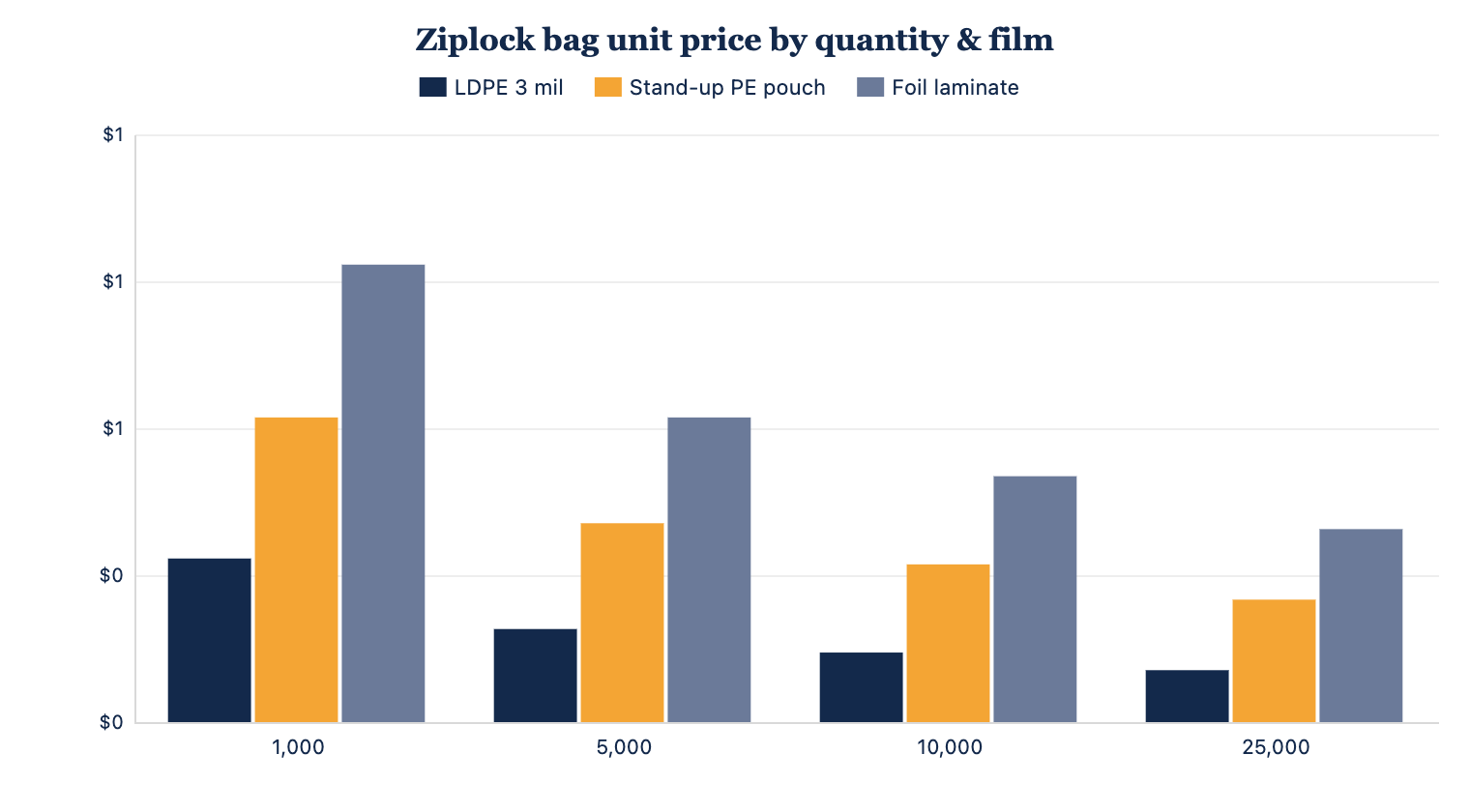
Standard LDPE ziplocks run from 1.5 to 6 mil. Two mil suits lightweight retail items and literature; 3 mil is the safe default for apparel and small parts; 4 mil handles food and denser goods; 6 mil is for hardware, bolts, and anything with edges. Laminated structures such as PET/PE or foil add barrier and stiffness for food and supplements, and they print beautifully, at a higher price per unit.
Thickness is the cheapest insurance you can buy. Moving from 2 to 4 mil typically adds only a few cents while eliminating most field failures, so err heavier whenever contents are sharp or heavy.
Closures, Gussets & Formats
The classic press-to-close zipper is fine for most uses, while sliders add perceived quality and easier one-handed opening for older customers. Child-resistant zippers are mandatory in some regulated categories, and tamper-evident tear notches above the zipper are standard for food. Stand-up pouches with bottom gussets have become the default retail format because they merchandise themselves, and flat bags with hang holes remain the budget pick for pegboard retail and e-commerce inserts.
Print methods at a glance
Flexographic printing suits one- to three-color logos at high volume with low unit cost. Rotogravure and digital printing deliver photographic, full-coverage designs; digital carries no plate fees, which makes it ideal for short runs and multi-SKU lines that share a bag size.
Comparing Common Constructions
| Construction | Barrier | Typical cost | Best for |
|---|---|---|---|
| LDPE 2–4 mil | Basic | $ | Apparel, parts, inserts |
| Stand-up PE pouch | Good | $$ | Retail shelf, snacks |
| PET/PE or foil laminate | Best | $$$ | Coffee, supplements, jerky |
Notice that the jump between tiers is measured in cents, not dollars. For food brands especially, the laminate premium is usually cheaper than the shelf-life complaints it prevents.
Where Buyers Actually Use Them
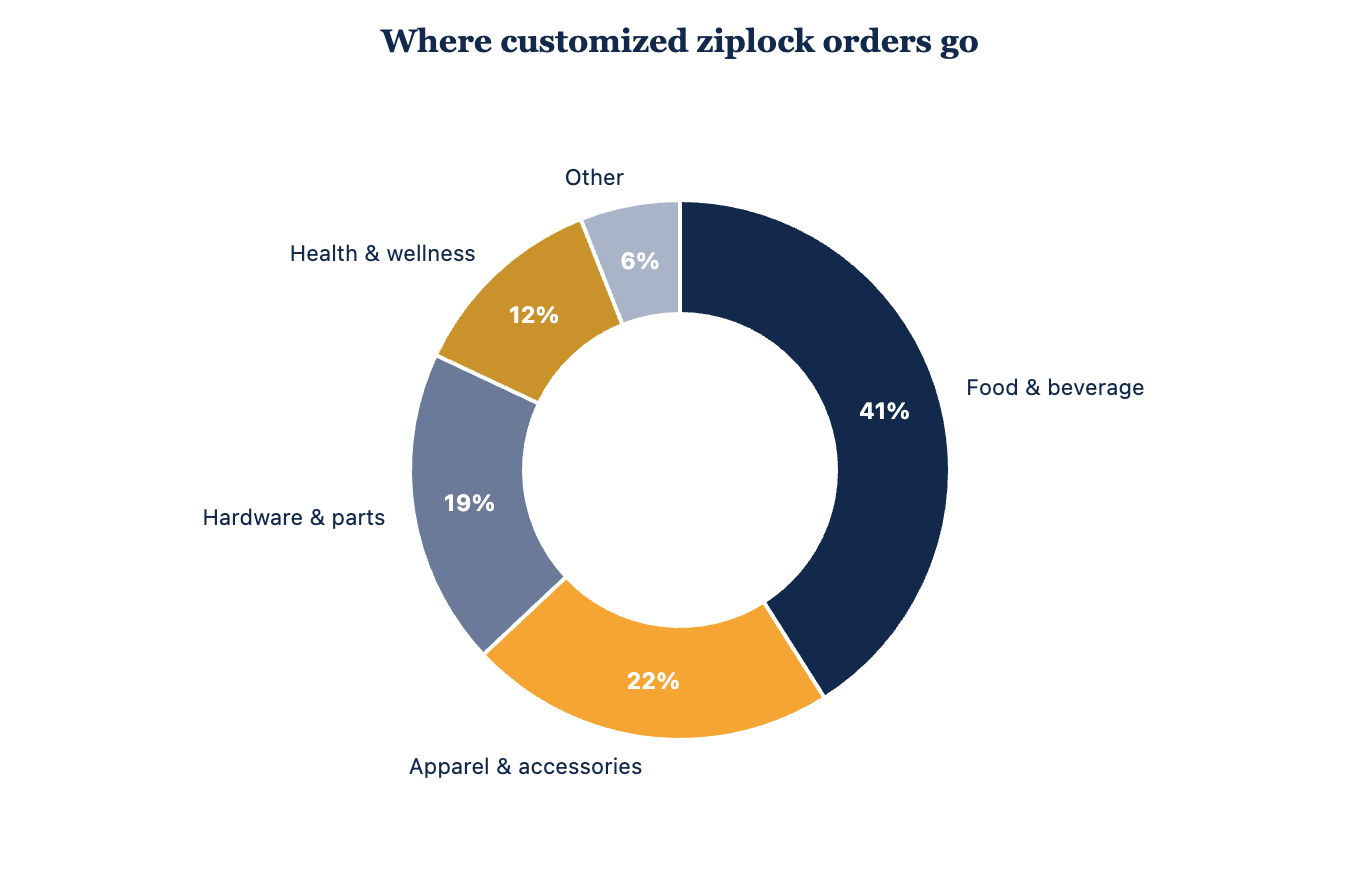
Across our order book, food and beverage leads the category, followed by apparel and accessories packing, hardware and parts kitting, and medical or wellness uses. The split below is a useful benchmark: if your use case sits in the food segment, plan for barrier film and compliance printing; if you are in parts and kitting, spend on thickness and a wide zipper instead.
Sizing: Measure the Fill, Not the Flat Bag
Bag dimensions are quoted flat, but contents are three-dimensional, so a bag that measures generously on paper can be tight in practice. The working rule is to add roughly an inch of width and two inches of height beyond the filled footprint of the product, more if the contents are lumpy or need headspace above the zipper for a clean seal. For stand-up pouches, the gusset depth sets how much the bag can actually hold upright, and undersizing it is the most common reason a pouch tips on the shelf.
If you run multiple SKUs, resist the urge to give every product its own size. Consolidating onto two or three shared bag sizes raises the volume on each, which drops the unit price and simplifies reordering, and a well-placed label zone makes one bag serve many products.
Compliance & Labeling
Food-contact bags need FDA-compliant film and, for many categories, printed nutrition and allergen panels; supplements add lot and expiry areas. If you sell into California, factor Prop 65 wording, and if your brand leans green, ask about recyclable mono-material PE structures, which are increasingly retail-mandated. Getting these panels into the printed design from day one is far cheaper than stickering thousands of bags later. Read more about our team and how we pre-flight compliance artwork.
Quantities, Pricing & Lead Times
Plate-based printing rewards volume: unit prices drop sharply between 1,000 and 25,000 pieces, and plate fees amortize to nothing. Digital short runs start around 500 units with no plates, perfect for testing designs before committing. Stock-size bags with a simple logo can turn around in two to three weeks; fully custom laminated pouches typically run six to ten weeks including sampling, so retail launch dates need early booking. You can compare formats and see live pricing examples on our homepage.
Ordering by Business Type
A snack or coffee brand should prioritize barrier laminate, tear notch, and a stand-up format, then let digital printing keep multi-flavor runs affordable. An apparel brand needs clarity, a 3 mil hand feel, and a suffocation-warning print for marketplaces. A hardware distributor should buy 4–6 mil with a wide zipper and write-on block. Whatever the category, lock the film first, the format second, and let quantity drive the price, and your customized ziplock bags will disappear into the workflow instead of becoming a support ticket.
Ready to spec your resealable packaging?
Send us your product, sizes, and quantities, and we will recommend a film, closure, and print method with firm pricing within one business day.
Home · About · Custom resealable packaging guides for food, retail, and industrial buyers.
Win Free Stuff
Enter below for a chance to win plus receive 10% off your first order.
🎉 You are in!
Check your email for your 10% off code. Good luck!